I. The Time of
Tango
India
Tango
India
My muscles have memorized this as my name now—though it once was not. Before my last birth, my sister, my mother and my dead father had a roundtable. What would we name our newest member? My sister wanted to name me after her doll, my mother abstained from voting, “I did most of the job already.” My dead father, very much alive at that time, took all suggestions with the flair of a diplomat.
Somewhere in the east of Jakarta now, there is a broken doll. We share similar names.
My sister read at three, questioned death at four. She binge-read the entire children books of our neighborhood library—then prematurely crossed into the adult section. Lucky for me, she named her doll before she turned bitter.
I was made from my mother’s womb, my father’s sperm, but I was born to a family of three. We are limping now, but we carry on in a language without tenses. My dead father is my father.
Once I brought him an old homeless clock, he stepped on a chair to oil it every day. When he couldn’t do it anymore, he wrote it a poem. He left thirty books with scribbles about life. What to do with it? I am still speculating.
Tipi, Couscous, what? They asked, brought me back from my wandering mind. I smiled, I’d answer, whatever you call me, I’d still be me. Tipi, Tiki, Ti Ti, Titit. Titit means penis in my mother tongue, in case you cared.
But emails went unanswered, invitations ignored. CVs glanced at and set aside.
My name was often offered silence. How do you protest as a ghost?
*
II. Flower
Kilo
Uganda
Sierra
Uganda
Mama
Alfa
“Kilo, Uganda, Sierra—can you repeat again, please?”
I was born when my mother’s yard bloomed, on a November day, neither cold nor gray but green, like any other.
Everyone in the neighborhood was young. Most households lived without TV, and the ones who had them were molded into watching the only state-sponsored channel. So, the kampong placed a bet on my gender, then gathered at the hospital.
I came out with a vagina. Many went home poorer. “They already have one daughter,” they said.
The neighbors have moved next door, occupying bed-size plots now. Houses outlived them, the mango trees and the corrupt state.
Before my father joined them, he used to tell me—reality happens three times: first in your plans, second in physical reality, and then in your memory.
My mother pushed so hard on the day of the bet, she first gave birth to her lunch. Then came me.
But the yard was flowering, and that’s the reality I was told.
So, I spelled my name: on the phone, at reception, in a store to pick up parcels. My lips smiled apologetically for a name I was not sorry for.
I pronounced the letters diligently, one by one, moving between the tongues I was borrowing. /u/ or /y/, /i:/ or /ɪ/, kilo or kappa.
By the seventh letter, there’d be a sigh. The mouth wove the letters together, trying to reach me.
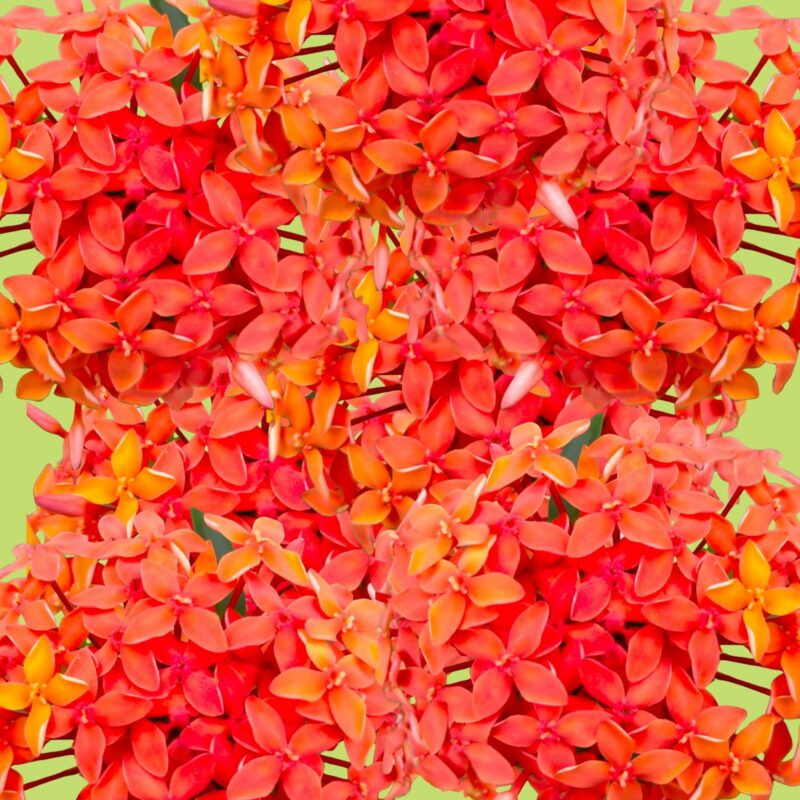
I take a deep breath and smell the red ashoka in my mother’s yard.
*
III. Blooming
Nano
Dino
Alfa
Romeo
India.
The middle is a flower; the final syllable means bloom.
Where I come from, we name time. We flourish words from numbers and carry the scent between our lives. The year the Majapahit Empire fell is not graved in numbers and instead named: ‘The disappearance of earth’s prosperity’.
We name our children like we name time—without surnames, not meant for immigration forms.
Daughters live without their fathers’ names but carry their high hopes. A timid child wished to be ‘The Bravest’ could suffer trying to grow into something they’re not. Children were sometimes renamed—not for fashion, but survival. Celebrated with red and white porridge, announced joyously throughout the village.
Tango-India, Tango-India; I announced when I entered, without porridge or celebration.
“What’s your last name?” they asked.
“I don’t have any,” I answered.
“Then we’ll call you Nothing.”
I’d sigh, then bring my father back to life. “Stat rosa pristina nomine, nomina tenemus nuda.” He often quoted at the dinner table. “Because what is left of a rose, at the end is its name.” He simplified. If we understood, so would his students. He reached for the sauteed meat my mother cooked, and I wondered, if he was not told what it was—would he know the difference between pork or beef?
I never told him, but I’ll tell him now: my reality happens four times—in ideas, in physical reality, in memories, and in the stories I tell.
If I don’t tell you now, what would be left of me?
ti·ti ku·su·man·da·ri /tiːtiː kusʊˈmandari/
n. (Javanese, from Sanskrit)
titi — the time of
kusuma — flower, blossom
ndari — blooming
When flowers bloomed.
*
IV. FAQ
Why don’t you use your western name?
Why don’t you have a last name?
What is your real name?
Can you spell it for me?
Please read the above. If your questions are not answered, please consider whether they need to be asked.


 In September 2022 SmokeLong launched a workshop environment/community christened SmokeLong Fitness. This acclaimed community workshop is happening right now on our dedicated workshop site. If you choose to join us, you will work in a small group of around 15-20 participants to give and receive feedback on flash narratives.