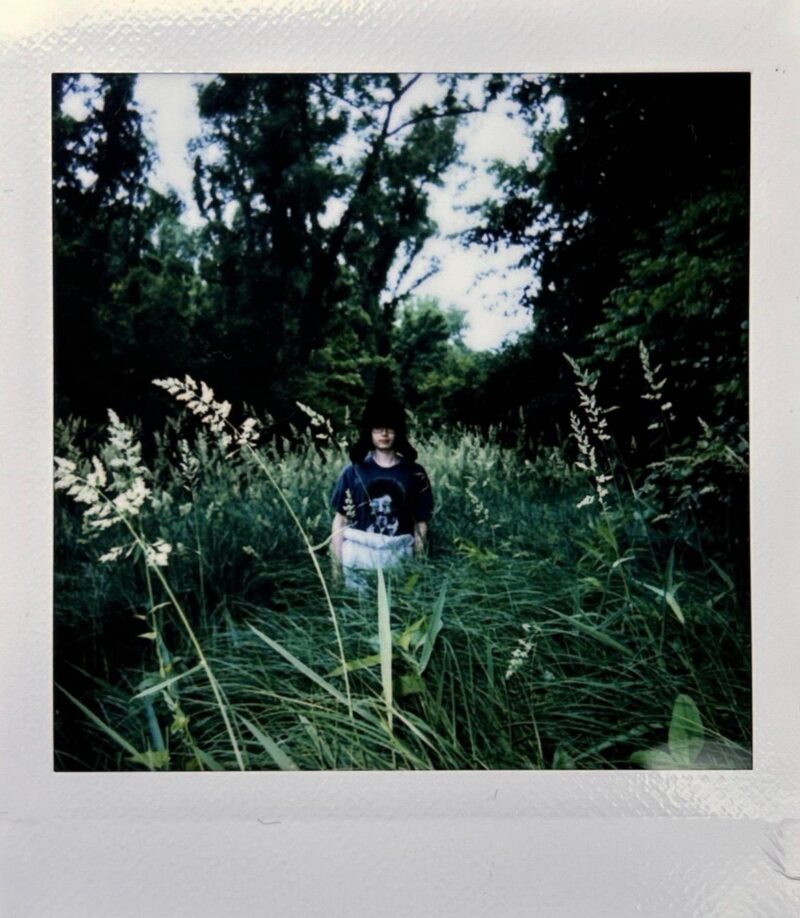
Would you prefer the story to be read as absurdist or with symbolism attached (no pun intended) to the themes?
I’m a writer who has no preference when it comes to how a reader engages with my work. I’m happiest when a story connects in any way with anyone! However, I intended to place symbolic weight on the central conceit. If we want to talk about style, I would categorize this closer to magical realism than absurdism based on its fantastic situation serving an emotional goal, rather than a philosophical one, alongside the in-world acceptance of the impossible as mundane. But there are obvious existential underpinnings to the labor throughline and a (temporarily) isolated protagonist, so I see the absurdism reading as well!
Throughout the story, the characters are unconcerned with Tilda losing body parts and more worried about her inability to work. Is this a statement on capitalism?
Given the focus on Tilda’s health in relation to her job, her boss’s ridiculous requirements, the Valvoline uniform, and the act of going to work, I see this story as having an interest in capitalism and economic systems in general. The modern world rarely focuses on individuals unless instructed to, so it would be unsurprising to me if, when told that an employee’s hands had fallen off, a coworker’s or employer’s first question were, “How will this negatively affect me?” We should all slow down and attempt to contextualize each other’s opinions and struggles and try to understand one another’s perspective before passing judgment. But that takes effort and sympathy and requires us to acknowledge that we are all imperfect and human—something that is difficult when the primary purpose placed upon a life is profit.
The emphasis on the word “whole” here feels important. Do you think we substitute the pretense of health (whole wheat cereal) for existing in a healthy society?
Yes. What can we do when megacorporations across countless nations create more pollution in a single day than we do in our entire lives? What can we do when microplastics are found in placental tissue? What can we do when PFAS contaminate our drinking water? What can we do when our ultra-processed food has been engineered by teams of people to be as addictive as possible? We can close our eyes, pick up the box of whole wheat cereal, and tell ourselves we’re in charge of our own health.
Jessica attaches Tilda’s hands to her own and replaces her at work. I see a parallel here to humans being replaced by robots. Was that your intention?
Tilda, after Jessica leaves her (or replaces her), displays signs of self-loathing or failure of acceptance that align with a loss of identity. If your identity is built by your employment, it makes sense to me that a similar reaction could happen if you were replaced by a robot in the workforce. With that being said, my main intent with this story was to explore how two specific people would react, and how their relationship would respond, to extreme, sudden hardship. The mechanics, whether that was robots or detaching hands, were less important to me while writing than the emotion. I see a tenderness, even a radical humanity, in the blurring of the line between the self and other for the sake of a partner in this story. I would hope that Jessica’s objective was to care for Tilda, and that Tilda would see Jessica’s actions the same way.
Tilda’s hands fell off without any gore that would suggest she is a natural being. She feels very modular, optimized. What would a future be like where we’re optimized for our best utility to our employers?
“Unpleasant” is a word that comes to mind. It would look much like any day of the week, I think, just more extreme. Countless people already build their entire lives around their employers, real or theoretical. I see tons of young and old folks striving for existences based on fleeting pleasure during the few hours they aren’t working or sleeping (e.g., how can I set up my life so that I can get X number of vacation days a year, X number of dinners with my partner a week, X number of hours watching television/staring at social media/playing video games a day?), and still, their primary focus is whoever is or could be up the chain of command. Should we instead disregard employability or financial well-being and focus on experiencing the world with all of our might? Maybe. But that’s scary and unsustainable if we want to participate in society. It makes me sad that so many of us don’t even dare to try to live.

 In September 2022 SmokeLong launched a workshop environment/community christened SmokeLong Fitness. This acclaimed community workshop is happening right now on our dedicated workshop site. If you choose to join us, you will work in a small group of around 15-20 participants to give and receive feedback on flash narratives.