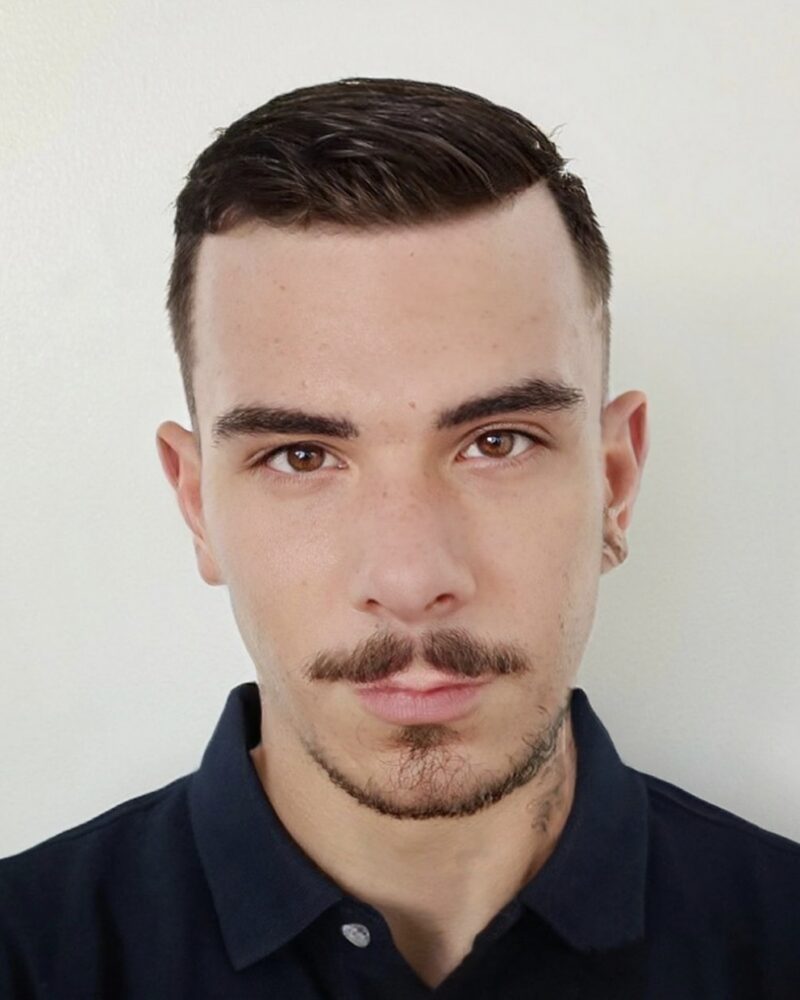
This story explores the mental/behavioral wellness space and the theme of water. Was there a particular moment or image that inspired this?
The initial image for “Retention” came from a short film in which President Kennedy dedicates Greers Ferry Dam in Arkansas to the local community. At one point, he asks the crowd, “Which is more wasteful, to let that water flood, or to use it and to use it wisely?” That line made me pause, and I recognized it, albeit in a different context.
I spent three months in a crisis house in my twenties. One of the therapists there used to say the mind is like water, always moving, but calm underneath. I believed her. However, I was also in a building designed to keep people in the system, and I was made aware of that. Both of those things were true at the same time, and I could not make them fit. That is what the story is about.
Ironically, this was around the same time I read Susanna Kaysen’s memoir, Girl, Interrupted. It felt particularly relevant because she spends the book as one of the two sanest people on the ward, and the institution has no mechanism for noticing. Wynona, my protagonist, is in the same position, fighting to be heard, but she’s never quite loud enough.
Her name is a nod to Winona Ryder in the film adaptation. There is a scene where a nurse drops Susanna into a cold bath and says, “Sorry, too cold, get yourself out.” For me at least, the water was a metaphor for her agency, and I wanted to explore what happens when somebody isn’t afforded that kindness. In “Retention,” the water does the opposite.
You used the style of a dervish to write this flash fiction, and this stressful and very mental story lends itself really well to this lyrical form. Was there a moment you decided to do it this way? When you began writing this piece, did it flow out as a dervish, or did you revise it to fit that form?
The water is Wynona’s state of mind, so the prose had to flow in the same way. I took some influence from the dervish style, but this piece is more of a stream of consciousness, muddled by racing thoughts. The first version was a single unbroken sentence of about a thousand words, without any full stops. It read as a stunt, and nobody wants to be trapped in someone’s head for that long with no way out. I sat with it for a while and then took it apart.
What it needed was three sentences, each running as long as a held breath. That gave me somewhere to put the breaks, which is where the reader gets to breathe, even though Wynona does not. She surfaces twice, and both times she goes straight back under. In a way, the story dictated where the full stops should go, and I did what I was told.
You’ve had many incredible stories published. Of all your short stories and flash fiction, are there specific ones that stand out as ones you’re particularly proud of?
I have a short story, “Diminuendo,” forthcoming with Heavy Feather Review. In that world, a death isn’t legal until a listener has taken down the last word, so the dead keep talking for weeks, and somebody has to sit in the room with them until the voice reaches zero. It’s told in descending decibels, sixty down to zero, and loses its narration as it goes, so by the end it’s just the Listener and the body on the slab, talking.
I’m particularly proud of this piece because it explores topics most stories shy away from. Generational trauma, sexual violence, and a father and son who cannot get free of each other, even in the afterlife. I also enjoy playing with form, and the structure helped me reach inside my characters’ heads in a way I hadn’t done before.
Did you have to cut anything significant from the final version of this piece? How many drafts did you go through for this one? Do you have a go-to reader whose approval you look for above everyone else’s?
I write longer fiction as a rule, and the shorter form is notoriously harder, so I wanted to see whether I could do it.
The first draft came in at around fifteen hundred words. There was another flashback, a haunting childhood memory that tied into the water. I cut it because the visuals were already doing that work, and because the piece had to come in under a thousand for SmokeLong, which was my first choice.
I went through five or six drafts. The version closest to the dervish was vague and dreamlike, which is one of my pet peeves, so the revisions after that point ironed it out.
My partner is my go-to reader, and if he does not understand something on the first read, I rewrite it. I will forever be one of those writers who finds fault with their own work, so once the sentence-level pass is done, I try not to look at a story again until it is published.
Do you have another work in progress that you’re excited about?
I’m querying my debut short story collection, Unhappy Endings. As you’ve probably guessed from the title, none of the stories end well. The idea came from reading other people’s work. Most nights, I read twenty submissions in a sitting for a literary journal. I often see writers spend three thousand words getting a character somewhere genuinely difficult, then rescue them in the last paragraph. I understand the impulse. But the stories that have stayed with me for years are the ones that refused traditional happy endings, and those are the ones in this collection.

 In September 2022 SmokeLong launched a workshop environment/community christened SmokeLong Fitness. This acclaimed community workshop is happening right now on our dedicated workshop site. If you choose to join us, you will work in a small group of around 15-20 participants to give and receive feedback on flash narratives.