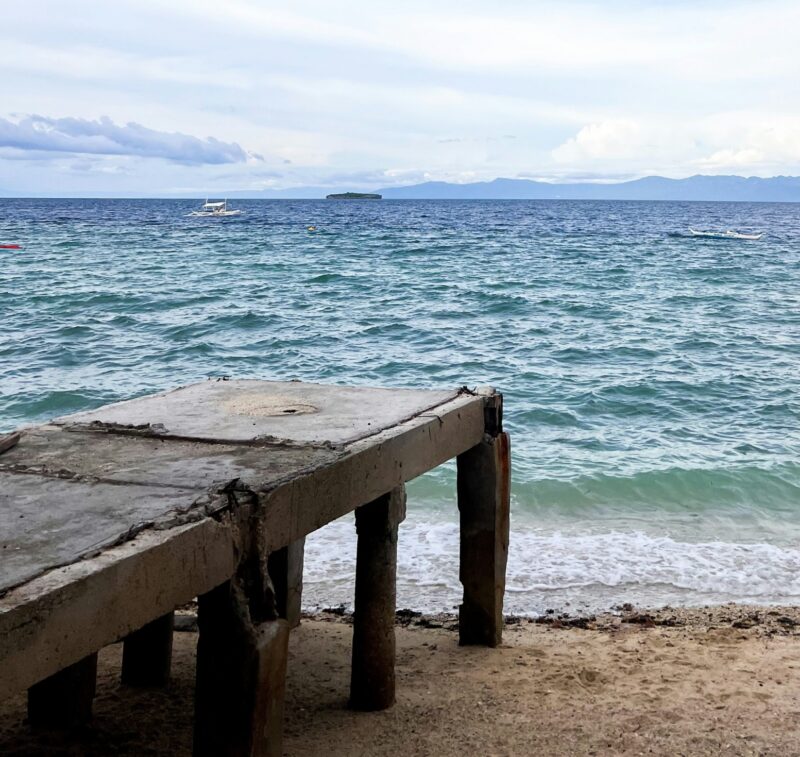
Your brother is the pier that juts into the bay, the one built before zoning laws, before anyone cared about rot or liability; the one the city keeps repainting because it’s cheaper than replacing the boards that slacken and give a tired groan as you step. He’s the pier the fishermen swear by out of loyalty. He’s always been there. That should be enough.
Your brother used to be the saltwater pool at the pier’s end, the kind fed straight from the ocean, frigid and bracing, daring you to jump. He taught you to dive clean, to trust your body midair. Now he’s the ladder with missing rungs, the metal slick with algae. You test each step, waiting for it to fail.
You don’t swim near your brother anymore, though you love the cold shock, the way it wakes your lungs. The water around him is unsafe. Runoff, needles, warnings everywhere. He swears it’s fine, that the signs are for tourists who don’t know how to read tides. The rash on your calves, the fever that followed, were the same either way.
After the night he punched the window, your brother is the bait shop with plywood over the glass. You can’t decide what scares you more: the bandage wrapped too loosely around his knuckles or the way he shrugs when you ask if it hurts. He’s the ice machine that runs but never makes ice. The new meds swell his ankles, turn his hands clumsy. He drops hooks, curses the floor. It’s been a long time since he moved easily.
Your brother is the channel marker that blinks out without warning, leaving boats to guess their way home. When the light returns, he insists it never went dark. He says he doesn’t need batteries; the old ones are fine. He always stops replacing them when the light settles, thinking the danger is gone.
At the end of summer, when the rental kayaks disappear and the souvenir stands shutter, your brother is the shoreline after a storm, strewn with kelp and shattered shells. The city sends a crew with rakes and a clipboard. They say erosion is natural. They say budgets are tight. They wish there were another solution.
Your parents say the same.
Now your brother is the foghorn you dread, the one that booms erratically, rattling windows at night. You hover at the edge of his room, listening for the next blast, planning your escape routes. Still, he startles you from the doorway, from behind the fridge. Old photos spill from drawers—him grinning, sunburned, holding a striped bass; him lifting you onto the pier railing—terrifying because they are good, because they remind you he was once the lighthouse throwing a clean arc across the water; the tide charts taped to the fridge, precise and comforting; reminders that coastlines run in families and you, or your children, could one day be all warning and no light.
You stand at low tide and see how far the water has gone out, the pilings exposed, the nails rusted into filigree. You tell yourself the moon will pull it back. You tell yourself this is how seas work. You leave your shoes by the door in case you have to wade in again.

 In September 2022 SmokeLong launched a workshop environment/community christened SmokeLong Fitness. This community workshop is happening right now on our dedicated workshop site. If you choose to join us, you will work in a small group of around 15-20 participants to give and receive feedback on flash narratives—one new writing task each week.