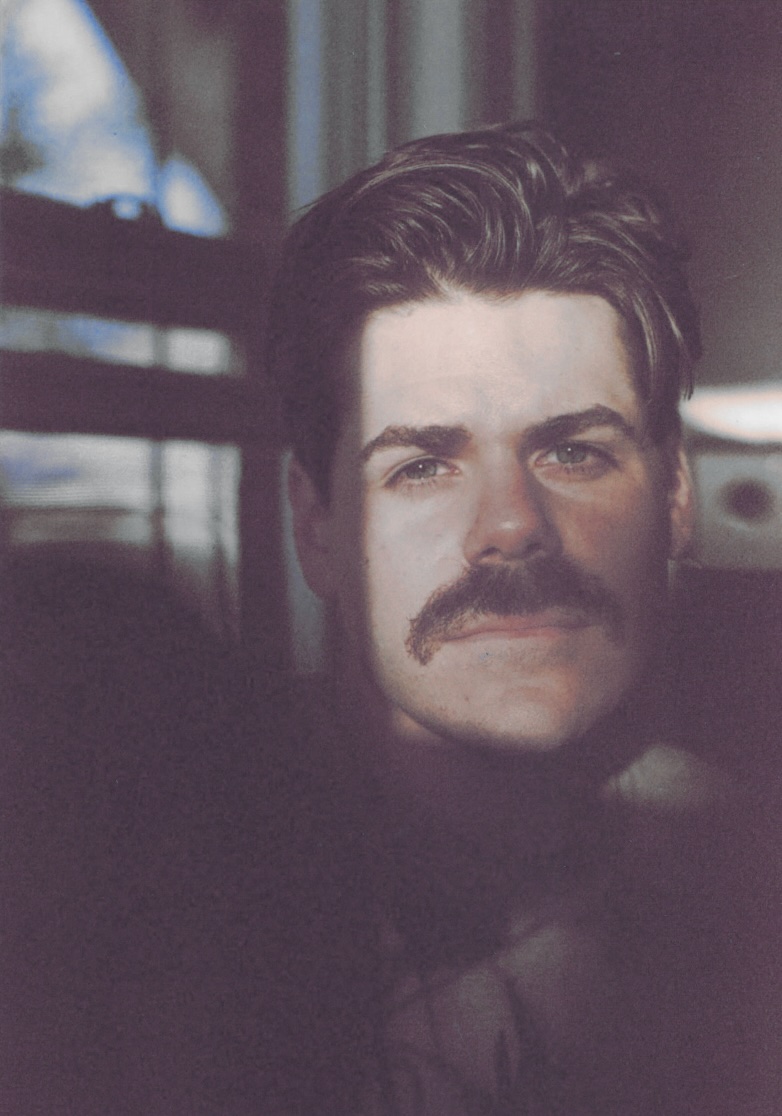
Vincent, your story opens with a lonely child‑astronaut and closes with an adult who finally seems to revel in solitude. Do you think solitude is a beautiful thing? And is it possible only in space?
I think it’s less about solitude, per se, and more about the contradiction of wanting to escape the world while being forever tethered to it via family or history or responsibilities or ambitions. This is the feeling I had while writing the story: to dream of escaping Earth (and therefore, escape all of humanity), and then to see the planet from that uncanny distance. There is this phenomenon called the “overview effect,” referring to the cathartic spiritual and psychological transformations astronauts experience after viewing Earth from space. This was on my mind. I thought, perhaps there was an evocative and strange way to explore this concept concretely. Of course, the experience is not limited to astronauts. We, terrestrial people, might also feel an elastic and confounding relationship to our personhood within a vast and frequently cruel universe.
Oatmeal is central to this story—the ubiquitous, sawdust-colored breakfast! I imagine your writing this with a bowl right in front of you. What made you choose oatmeal as the food that anchors the story?
Oatmeal is a particularly ruminative breakfast, don’t you think? Its texture and viscosity lend themselves to daydreams. Additionally, it’s unpretentious, utilitarian, good-natured, stolid: all qualities our central character might aspire toward or even possess. That said, I don’t much care for oatmeal myself.
One of the things I admire most is how you’ve used scientific language such that it blends naturally with the flow. That’s not an easy thing to do. Did that take a lot of thought and iterations?
Much thought. The diction is so important, not only to the rhythm and syntactical play of the story, but also to opening up the narrative. The narrator, the teller of this story, has access to so much, not only to our central character, but also to history and science, and it’s only through a few precise lexical choices that I can make the story happen for the reader. That’s often the real pleasure for me—in what I write and what I read—the precision of language and the juxtaposition of surprising images.
Another notable fact is that the story spans across the kitchen table, internal musings, and the vastness of space. How did you approach the structure and pacing when knitting these worlds together?
I’m unable to think about structure without considering shape, thanks to Jane Alison’s book Meander, Spiral, Explode. And the shape I began to see in this story was a kind of sphere. That is, a shape with no point of convergence, but if one were to go in one direction, they would find themselves, eventually, back where they began. If I were more scientifically minded, I’d say it’s a representation of the experience of special relativity—time dilation and simultaneity. But really, when I’m working, I’m not thinking of Einstein or physics; I’m thinking about movement and language and relations. I’m trying to surprise myself. And in a short piece, I find I have a few options: the fabulist option of distilling a story down to its most basic elements, the lyrical option of rendering a scene or a state of mind through a particular lens in an effort toward prosody and originality, or a more explicit rhetorical mode in which an idea is conveyed through a particularized narrative voice. In this piece, I tried to combine these modes. Perhaps with some success.
I’m intrigued by this line. We are all the children of astronauts—the astronaut knows this—seeded from space. Please tell me more. How do you want the readers to interpret this cosmic inheritance?
I’d be remiss to prescribe a particular interpretation, so I’ll offer a few. Firstly, a kind of parental mythology—our progenitors being, to some degree, perpetually alien to us, often unknowable or unknown in some deeply personal way. Secondly, a kind of scientific nod to the Big Bang, the celestial origin of all matter. Thirdly, it might be read as the manic interpretation of our central character who sees in the cosmos an answer to the anxieties of both her childhood and her motherhood. Did all of that occur to me while I wrote the story? Occasionally a sentence only makes sense in the aftermath of its writing.

 In September 2022 SmokeLong launched a workshop environment/community christened SmokeLong Fitness. This acclaimed community workshop is happening right now on our dedicated workshop site. If you choose to join us, you will work in a small group of around 15-20 participants to give and receive feedback on flash narratives.