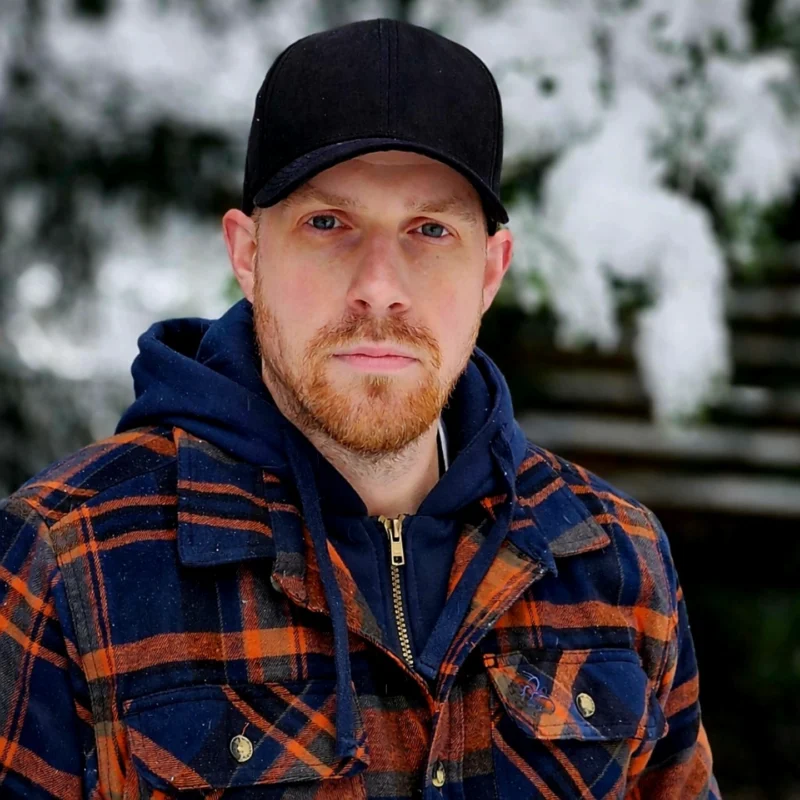
Addiction is a difficult subject to write for many reasons, but I think you’ve hit the mark masterfully here with tone and word choice. What drew you to this topic?
I’ve witnessed friends and loved ones deteriorate and perish from needle points and pills over the years. I’ve consequently carried so much for so long that it’s been difficult to articulate. Ironically, I’ve come to believe that writing about something as emotionally charged as addiction, a topic that can easily spill into melodrama, demands the very thing that I couldn’t execute with this topic until recently: restraint.
Fantastic job of characterization in a short space. Do you have a particular process that helps create such compact yet impactful snapshots? Anything about your writing or editing process you could share that might help other flash authors?
I might be one of the few teachers who vehemently dislikes beginning-of-year icebreakers with students, probably because it reminds me of exposition dumps in fiction. I prefer to learn who my students are gradually—through their readings and our discussions of literature, through their writing, and through the conversations we share in conferences. Slowly, little fragments of their lives are revealed, and by the end of the year, I know them well enough to feel the ache of letting go.
Readers, like students, are perceptive; they register contrivance immediately. I resist beginning a relationship, whether pedagogical or artistic, with artifice. In my fiction, especially flash, I attempt to reveal character not through announcements, but instead through sustained moments of stress and pressure: a landlord evicts you, a stranger threatens your space, a father fails to show up.
I think “Holes” could be interpreted a multitude of ways, but there is an added layer here when you consider the importance of bees to the world, ecologically, and the danger they are in as a species. How did bees come about as the central analogy for this story?
The personal thread came first; the geopolitical or ecological resonance was gently refined later. That’s always the case for me when drafting stories. I’m wary of making overt commentary through fiction. At its core, “Holes” began with the love I have for my brother—who is very much alive and, thankfully, not addicted to substances. We spent a lot of time outdoors in the 1980s and 90s as kids. He has always struggled with asthma, and as a child, it landed him in the hospital more than once. I carried a persistent, private fear that the bees in our backyard would sting him and stop his breathing. One summer, we quite literally killed bees in this manner, my irrational effort to protect him. I still feel guilty about it, as though I’ve contributed, however insignificantly, to their decline. That guilt lingered, eventually in the form of a rough narrative shape in a writing workshop with author Benjamin Percy a couple years ago.
That last line is so devastating and, to me, drives home the sense of a cry for help, yet the narrator begins with “I’m not surprised ….” It’s a beautifully sad juxtaposition, especially given the narrator’s insistence that bees are the cause of death. In many ways, the narrator is passive throughout the piece. Is that passivity a protective measure?
Sometimes, when people feel powerless, they attempt to regain control through reshaping the narrative, the story they tell themselves, generating a new logic. Often, it’s a mechanism of survival. And I was recently restruck by this idea when I listened to a lecture Tobias Wolff gave with John Burnham at the Sun Valley Writers Conference where he spoke about how we come to “… know ourselves and even define ourselves by the story and stories that we tell about ourselves, that we decide is our story.”
What’s your favorite flash piece you’ve read lately? Any shoutouts you’d like to give for inspiration and/or support?
Here is a list of stories that have stuck with me long after reading:
“Coat” by Sarp Sozdinler (HAD)
“Into the White” by Gillian O’Shaughnessy (Fractured Lit)
“The Last Monkey” by Sarah Carriger (X-R-A-Y Literary Magazine)
“Bait” by Amy Sayre Baptista (SmokeLong Quarterly)
“Defpotec” by Parth Shah (Wigleaf)
“Laugh Track” by Will Musgrove (The Cincinnati Review: miCRo)
I’m grateful for my daughters, Evelyn and Dylan, for continually pushing me to write and be a better dad and human each day; to my wife, Ashleigh, for making the time and space for this work to be possible. Thank you to my parents, my brother Eddie, and my sister Melissa for teaching me the enduring value of prioritizing family. I’d also like to thank Vincent Hoffer, who helped me with this recording and whose music and passion continue to inspire me. I’m so grateful for Ben Percy, for the inspiration, the encouragement, and the feedback when I needed it the most. Thank you to the Great Neck Public Schools, my central and building administrators, and Matt Blackstone for supporting both my academic and creative work. Finally, I’m thankful for my students, who remind me each year why relationships, stories, and each word we use still matter.

 In September 2022 SmokeLong launched a workshop environment/community christened SmokeLong Fitness. This acclaimed community workshop is happening right now on our dedicated workshop site. If you choose to join us, you will work in a small group of around 15-20 participants to give and receive feedback on flash narratives.