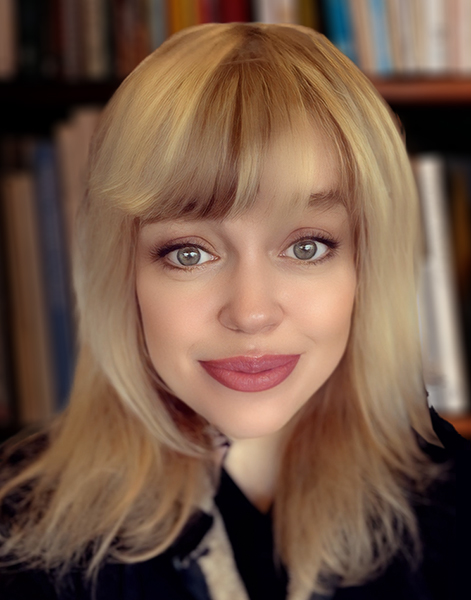
In your title, I found the word altar fascinating. Did you see the salon as an altar or did your title naturally evolve from the related words like saint, temple and worship in your story?
I always start with the title for some reason! In this piece, the beds where the narrator’s clients lie to get their treatments seem to her like the altars where you light candles to saints in church. The altar image reminded me of the phrase “your body is a temple” from the Bible, where Saint Paul talks about the human body as an altar for sacrifice to God. “Your body is a temple” is a popular wellness slogan now, too, advertising things like particular skin-care routines. As I worked on the story, I found myself wondering if these interpretations of bodies as temples are really as different as they seem, or if they’re both promoting the goal of self-care under different banners, and also, somehow, the goal of self-sacrifice, as the narrator is finding.
The beginning grabbed my attention. How did you decide on the unusual details that went into the first paragraph?
I took on a lot of part-time gigs going through college, and salon work was a memorable one. I was doing my PhD in in Boston, so I guess the process of using wax strips got fused with in my head with the marble nudes I saw in the Boston Museum of Fine Arts during that time. One sentence that didn’t make it into the final cut was where the mother, an art history professor, tells the narrator that “the nineteenth-century art critic John Ruskin was so used to the smooth marble labia of classical statuary that on his wedding night when he touched his bride’s bush, he ran from the honeymoon suite screaming.” I love that anecdote, which says so much about the idealization of the female form in art and in life. Lately, more and more people are freeing the pube and the hairy armpit—maybe shaving and waxing things smooth is over and the age of the great god Pubis is upon us!
The story culled from so many diverse elements, from the marble Venus to the hairy statue of Pubis, to Diane of Poitiers, all in a small space. How did you arrive at this kind of juxtaposition?
I’m fascinated by the art that orbits religious ritual, whether it’s a saint’s reliquary, or a statue from a Roman temple. In Greco-Roman liturgy, you get the “Minor Gods,” deities of daily things like doorknobs and pastries and erections—I felt the absence of a “God of Pubes,” so I invented one. The marble Venus connects to the story because of her unrealistic hairlessness. And Diane of Poitiers always seems to me a little like the patron saint of beauty treatments—a French Renaissance power broker who depended on her beauty to maintain control of the country, ultimately dying from the liquid gold she drank to maintain her looks. In my piece, the mother’s lost art history knowledge forms a constellation of images in the narrator’s head: Her mom’s distaste for body-worship is bracingly secular: Bodies are just “cars brains drive.” Some of the narrator’s anger stems from the fact that the religion of brain-worship has failed her mother in such a cruelly ironic way.
The unexpected ending hit all my feels. I loved the swerve the story took, from the Saint Cindys to the intensely personal. Did you know the direction the story would take, the leap from the physical to the emotional, or did it evolve as you wrote?
I sometimes think flash is like a dog mooching round the yard, sniffing after bobcats and coyotes, venturing a little way into the woods, circling home—emotionally speaking. The ending of this story comes to rest on a central theme for me: The loss that accumulates in spoonfuls as your parents age. You find yourself missing who they were, and loving them as they are now, and then you have all this anticipatory grief that’s hard to talk about (so of course you have to write about it). The image of caring for someone who’s sick is intertwined for me with other kinds of hands-on care—in this case, beauty treatments, or washing the body of a saint in the hope of preserving them forever.
Since this story won the Smokelong Workshop prize, I have to ask, do you remember the prompt that brought about this marvelous story? How do prompts ignite a story for you?
The prompt was “The Body and The Gaze” from February 2025: “Draft a narrative in which the POV character is sizing up everyone around themself. Plus points if you can braid this with the narrator’s own (latent) self-hatred (an excellent opportunity to bring in the narrator’s backstory). Don’t be afraid to make this a damn fun read.” I love the ingenuity and nuance of SmokeLong prompts—whatever else is going in my life, they anchor my writing each week. For that workshop, I was in a feedback group with two of my writing heroes, Emily Rinkema and Allison Field Bell, swooning over their writing, and the task included an amazing reading from Emma Stough, We Expect You To Take This Seriously, where the We of the narrative propels the reader on a wild ride through this secretive coming of age ritual that feels exciting and ridiculous and way too physically intimate all at once. The last word in Emma Stough’s story, “martyr,” got me thinking about medieval saints and reliquaries and all the ways we fight our bodies and bitch about them, and also worship them and work so hard to preserve them.
What keeps you writing flash? What would you say is the one thing that draws you to the form?
I can’t get enough of flash. I typically read a couple dozen new flash pieces every week. I’m writing longer form fiction too – a novel at the moment – but there’s something about the intensity of flash, the canvas it creates for inventiveness, that’s endlessly compelling to me. I can’t see myself ever falling out of love with it. Plus, the flash fiction writing community are some of the nicest people around.

 In September 2022 SmokeLong launched a workshop environment/community christened SmokeLong Fitness. This acclaimed community workshop is happening right now on our dedicated workshop site. If you choose to join us, you will work in a small group of around 15-20 participants to give and receive feedback on flash narratives.