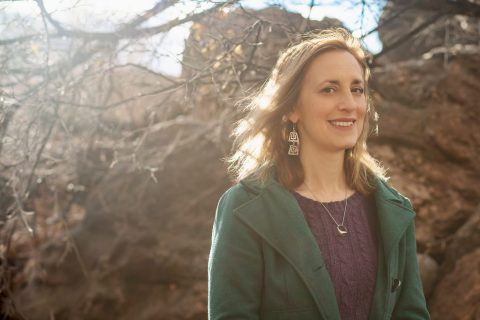
Jennifer Wortman will be giving away a copy of her book, This. This. This. Is. Love. Love. Love. to the writer of the story she selects for publication!
Your collection of stories, This. This. This. Is. Love. Love. Love. (Split Lip Press, 2019) is a mix of full-length and flash. Can you tell us a little about putting this collection together? How do you move between flash and full-length in your writing practice? Do you automatically know whether a story is going to be flash or longer?
I wrote the stories in my collection over a good decade and a half. Earlier in my life, I mainly wrote full-length short fiction, though I dabbled in flash. In fact, my first published story, “Missing,” which appears in my collection under the title “Sometimes Things Just Disappear,” was a flash piece. But I didn’t come to flash seriously until after my kids were born: the form worked well with my new time constraints, but it also reflected the added urgency and intensity that came from giving birth and raising young kids, that constant encounter with new life and the specter of death. My interest in flash flared again when my father was dying of cancer: I didn’t have the time or mental energy to write anything sustained, but I could dip in and out of writing in little frantic bursts and again harness the energy at the edge of life and death. Flash, I think, has the peculiar power to evoke the forces of mortality; the form, by definition, is transitory, and you can’t get too settled or comfortable.
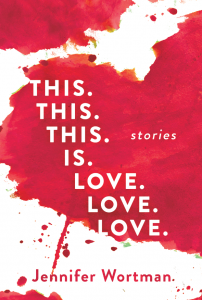 Though the bulk of my collection is full-length short fiction, flash fiction gave my book vitality and shape. I’d made half-hearted attempts to compile my full-length stories into a manuscript, but nothing really stuck until I realized I could alternate flashes and full-lengths to create a richer dialogue among the pieces. Although my original structure didn’t survive the final edits, my excitement about punctuating my book with flash got me serious about my collection.
As for moving between flash and full-length fiction in my practice, sometimes, as mentioned above, the form I choose is circumstantial. I tend to write longer pieces during more relaxed times in my life, and I’m doing a lot of that now. But the choice between full-length and flash for me is also a matter of pacing and scope. I can sometimes tell what form a piece will take in the first couple paragraphs: flash narrows in fast and moves at a clip while full-length short fiction casts a wider net. Sometimes, though, I have to write my way through it. I’ve had 3000-word stories become 600-word flashes and vice versa. So intensive editing can be a big part of finding the story’s true form.
What are you working on now?
I’m working on a book-length manuscript I’m currently calling a novel-in-stories, but who knows what final form it will take? It’s about a middle-aged mother of two who loses her husband to cancer then sleeps around and has borderline paranormal experiences while trying to bring her husband back. I also continue to write a little stand-alone flash, as well as the occasional full-length short story and the very occasional essay and poem.
You’re teaching two upcoming workshops at Lighthouse Writers Workshop, both aimed at revving up one’s writing process. I’m curious how you rev up your own practice. Do you have specific exercises or routines you use when you’re in a rut and want to generate new work?
I have a bunch of tricks I use to rev up my practice, depending on my needs: switching genres; working with pre-existing texts through erasures and “found” writing; using dreams as prompts; running before I sit down to work, etc. I also save everything, so I have a ton of old failed drafts to cannibalize when all else fails. But my go-to technique is freewriting, just getting those words down without forethought or judgment for an allotted time period (and that’s the method at the heart of my upcoming Lighthouse classes). Often when I’m stuck in a piece I’ll freewrite “off the page,” using a separate file or sheet of paper, until the knot unravels. This method takes the pressure off because the writing “doesn’t count”—it produces a lot of dreck but also exciting discoveries I can fold into my “real” writing. However, sometimes nothing works and then I resort to weird, cosmic begging that looks a lot like prayer.
What kind of story would you love to find in the queue this week?
My tastes are eclectic: I’m one of those I-know-it-when-I-see-it people, but that’s not helpful here. So to repeat myself a little, I want to see urgency and intensity. Also vulnerability and power, a fresh voice and vision. Craftsmanship, by which I mean polish but not slickness. I like subversive, surprising forms but I also appreciate a good, old-fashioned story well-told. And while I love stories that stir raw feeling, I also enjoy writing that appeals to the intellect: my dream piece would do both.

 In September 2022 SmokeLong launched a workshop environment/community christened SmokeLong Fitness. This acclaimed community workshop is happening right now on our dedicated workshop site. If you choose to join us, you will work in a small group of around 15-20 participants to give and receive feedback on flash narratives.