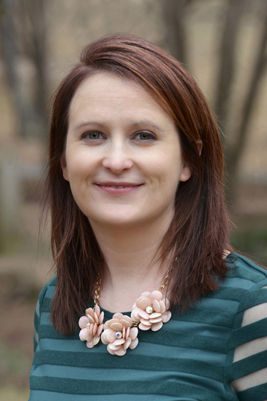
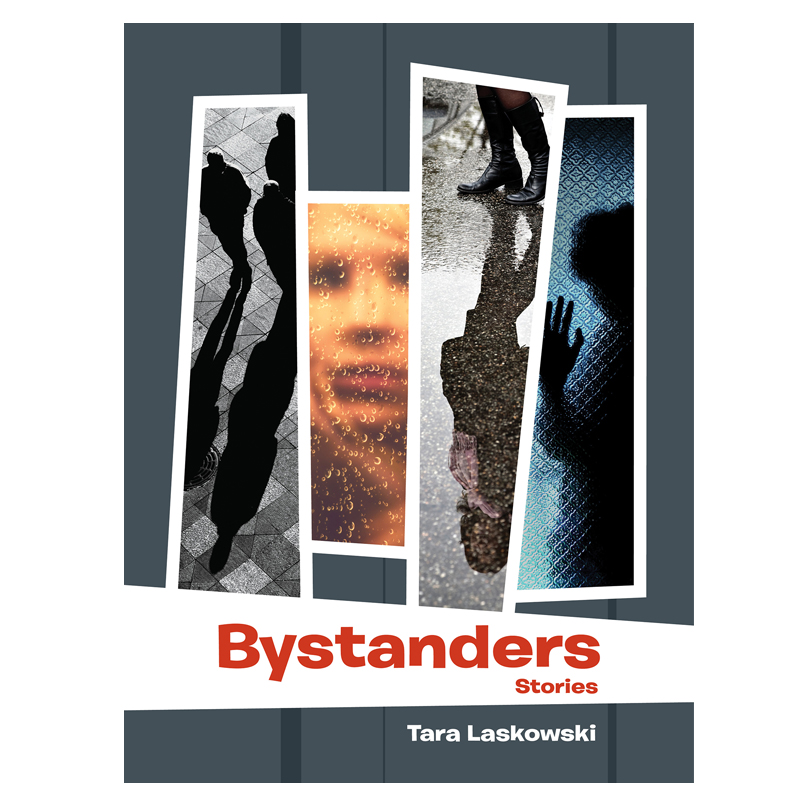
All submissions sent May 16-22 will be read by Tara Laskowski. The writer whose work she selects for SmokeLong Weekly will receive an autographed copy of Bystanders. Read on to learn more about Bystanders, Tara, and her definition of flash fiction.
One of the things I really admire about Bystanders is that it explores a point of view I think a lot of writers get pushed away from: people who are seeing the things happen rather than doing the things. How did you start putting Bystanders together as a collection?
I don’t know if I consciously decided to sit down and write about these topics. I think it just kind of evolved as a theme, and then I latched on to it. I hate melodrama. And I feel like if I try to write about someone who gets into a car accident or is dying of cancer or in an abusive relationship, I might verge into that territory. So instead, I’m more drawn to writing about the people on the periphery of those things and the ways something terrible happening to someone else can affect you in profound ways.
How did you decide these were the right point of views for these stories?
It fits for me because I’m always wondering about the smaller stories. Like, when I watch an action movie and the hero walks out of the ruined city, carnage behind him, and gets in the taxi to go home to his lover, I’m wondering: what the heck are the people who live a few blocks away going to think of this? How are they going to get to work tomorrow? And so my mind starts unraveling all that, because really the hero is kind of boring. It’s what happens after to everyone else that’s more interesting to me.
What are your favorite works of art, movies, TV episodes that explore the point of view of a bystander? Why?
I took a film class once in college where we talked about voyeurism in film and so the obvious ones I think of are Psycho and Blue Velvet, where there is watching in the most literal sense. But then you’ve got books like The Great Gatsby, which is all told from the point of view of the observer. But if you get all philosophical, isn’t all art about bystanding? We’re all just peeking in to these other worlds—whether it’s looking at an Edward Hopper painting of a woman in an office late at night, or watching a serial killer sneaking up on a couple, or reading about another time and place we’ve never experienced. We’re all, always, witnessing. And sometimes what we see can alter the course of our own lives, even if the trauma isn’t happening directly to us.
 A favorite story of mine from the collection is “The Monitor.” One of the things I like about it is that it doesn’t over-explain anything. Maybe Myra is slowly succumbing to sleep deprivation and paranoia. Maybe there is a truly evil spirit living in the house across the street. I think the way it works can be summed up so well by these last lines: ” The wind kicked up then, howling as it rushed between the houses. It had a bitterness to it, that first hint of winter. The cold had arrived, and it was settling in.” And it works so well because just like the rest of the story it’s seeped in so many meanings and interpretations. This is all to ask: how did you land on that final image?
Thank you! I’ve gotten a lot of feedback on that story, which is about a woman who starts seeing odd things in her baby video monitor. At first she thinks it’s just signals crossing with the family across the street, but then it gets more sinister.
As for that final image, I really am not sure where it came from. I know I had a lot of trouble finding the right way to end the story. It went through a lot of revision and a lot of really terrible ending images. The one thing I knew was that I wanted the story’s ending to be ambiguous about whether it was fatigue/stress or something supernatural going on. I think there are clues for both cases to be made there, but I didn’t want to create a definite path, because there often isn’t a definite answer to these kinds of things. The cold seemed right to me, because whether Myra is beginning to realize that there’s some kind of ghost or if she’s realizing that she’s spiraling out of control, there’s a dread there, and for her it’s just beginning.
In ten words or less (your choice consecutive or non), what’s your definition of flash fiction?
Super short stories with immediacy, rhythm, and drive. No punchlines!

 In September 2022 SmokeLong launched a workshop environment/community christened SmokeLong Fitness. This acclaimed community workshop is happening right now on our dedicated workshop site. If you choose to join us, you will work in a small group of around 15-20 participants to give and receive feedback on flash narratives.