There’s such power in the way you utilize repetition throughout “Worm.” Was it something that emerged during the writing process, or was it a more intentional incorporation from the start?
I love repetition and I wish I could say that it was there all along, intentionally, but it didn’t really gel for me until the second draft. The general structure was there in my first quick draft: the three beats of the narrator following the worm and returning momentarily to acknowledge what’s actually happening in the scene, albeit in a very dissociative way. In that first draft I was so focused on the worm that the assault felt almost like a vague passing thought (is it real; is it imagined?), and the repetition grew out of an effort to rectify that.
How do you feel the repetition serves the piece?
With the repetition, I was trying to accomplish a few things. First, I wanted to root this piece in the scene, for something that’s already in progress. It creates an almost-rhythm for what is happening out of the narrator’s focus, and builds upon that in each section, increasing the pace. For me, the slight alterations between the anaphoric phrases felt a bit jarring, and that seemed right to me; sexual assault is jarring. I also wanted to use the repetitions to establish more concreteness in the scene, to let the reader know this is what’s happening, it’s still happening, there’s nothing consensual or sexy or loving about this set up: The narrator turned away, cheek against that hard, grungy flooring. We can follow the narrator’s dissociative gaze and pay attention to the worm (thank goodness for dissociation!), but there’s no escaping what’s actually happening as the narrator turns our focus back to it again and again.
As a survivor of SA, this piece resonates with me intimately, and I know firsthand how difficult it can be for writers of any genre to find their way into writing about violent and traumatic experiences like the one your narrator is presently enduring. How did you find your way into this piece? What was your entry point?
It’s so difficult, but on this occasion my entry point was the worm itself. I should probably preface this by admitting that I’m a bit obsessed with the artwork of Felicia Chiao and the emotive, often dark and anxiety-infused quality of her playful drawings. Early last year I referenced some of Chiao’s images as writing prompts for one of my online groups, and I found myself drawn to her sometimes cute, sometimes oppressive worm figure. In freewriting about worms, I wondered what kind of situation might create that dichotomy of emotion for a character, of perhaps feeling both protective of and haunted by an earthworm.
Months later I was still thinking about the worm in terms of character when Erin Vachon presented us with a brilliant SmokeLong Summer prompt asking us to pair metaphor with pain. The worm presented the perfect vehicle for this, as it let me draw a slant parallel to the trauma without centering the narrative’s focus there. The emotional impact of sexual assault is a topic I often wrestle with in my writing; it’s important to me to keep trying to write about the hard things but I know it’s a difficult ask, inviting readers to linger in the spaces of traumatic topics. Which is why it was interesting to play with this idea of superimposing the discomfort of the worm encounter onto the sexual assault. I hoped it would provide a vulnerability and rawness that echoed what’s really happening in the scene.
Each time I read “Worm,” I vacillate between whether I think the title character is an embodied or purely symbolic creature. Is this uncertainty something you hoped your reader would experience?
Oooh, I love that you’ve had this thought. I initially wanted readers to believe in the possibility of the worm’s existence; I certainly wanted the narrator to believe in it, to have something to cling to in a horrific moment. However, in asking the worm to do so much heavy lifting in this piece—as a stand-in for the assault, a potential savior, and a mirror for the narrator’s own self at the end—I think the metaphorical shapeshifting opened the door for uncertainty. If this uncertainty encourages the reader to question, to ponder reality and meaning while accompanying the narrator on their emotional journey, then maybe that’s the best I can ask of my work.
Who are some of your writing influences, and what are you reading right now?
There are so many writers I admire and am inspired by, from poets to novelists, but the most influential ones have been people I think of as my flash mentors: Kathy Fish, Jude Higgins, and SmokeLong’s own Christopher Allen. These are the flash writers and teachers that I find myself returning to, and who, through their exemplary work and workshops, have consistently encouraged me to keep learning and growing. They’re also genuinely good people who possess such a generosity of spirit, something we need more of in the world. As for reading, this year I’ve been fortunate to receive a grant from Arts Council England to explore a longer narrative project, so I’ve been purposefully reading more experimental books with fractured narratives. I’m currently enjoying The Singularity by Balsam Karam, but I’m also open to suggestions. Who else should I be reading?
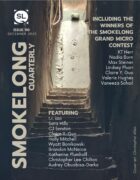

 In September 2022 SmokeLong launched a workshop environment/community christened SmokeLong Fitness. This community workshop is happening right now on our dedicated workshop site. If you choose to join us, you will work in a small group of around 15-20 participants to give and receive feedback on flash narratives—one new writing task each week.