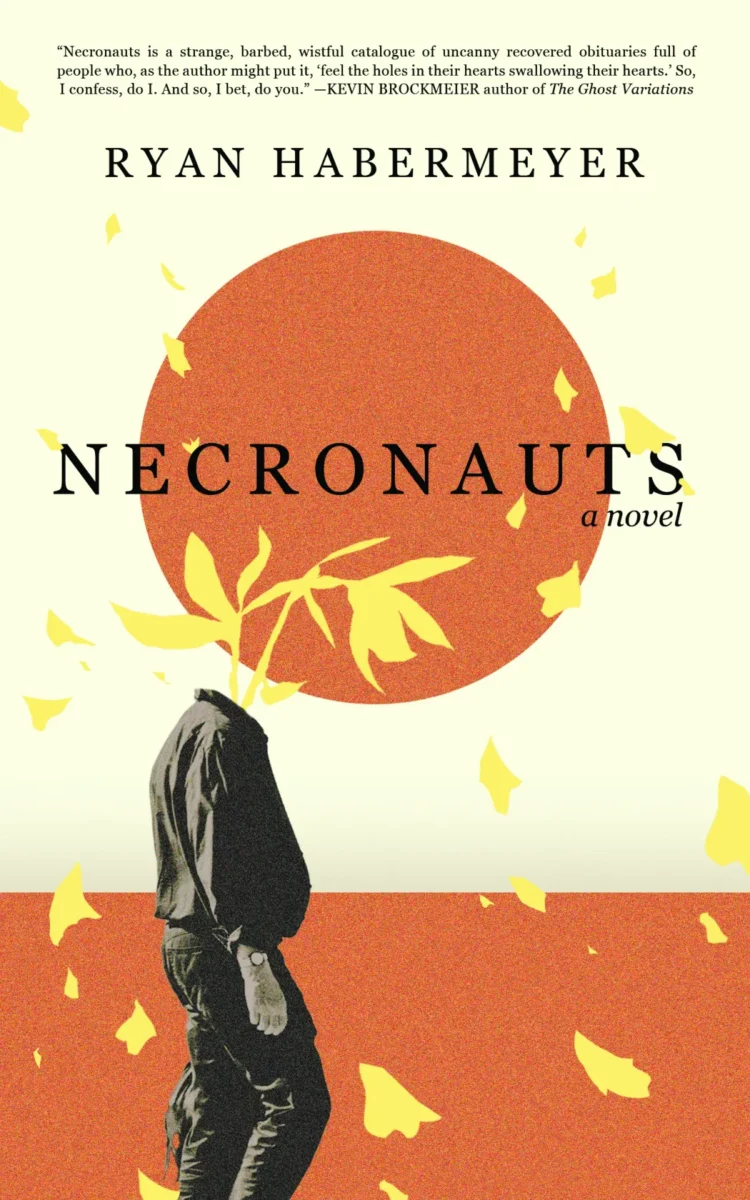
Interview by Michelle Ross
MR: First, congratulations on Necronauts, Ryan! It’s a weird, wild ride of a book. The novel is composed of fragments, of flashes, if you will. I had the pleasure of publishing a few of these flashes over the years—first in Atticus Review, then in 100 Word Story. Did you know early on that these flashes were part of a novel or did that idea come later?
Yes and no. One of the difficult issues I have with writing flash pieces is I’m never satisfied with them as one-off stories. There’s a compulsion on my part to try and weave them into some larger project. Even if I have no idea what that project is. The way my writing brain works these days is I’m trying to craft some kind of narrative dialogue between pieces, whether that’s a story collection, or novella, or novel, or whatever. It’s a little like looking in a photo album. If all you’ve got is one photo all by itself and the rest is empty pages, well, that’s a little sad to me. I want a series of photos that are in conversation with one another. Same with flash pieces. I never start off thinking of them as a series, but once they’re finished, I tend to wait around a long time to let them breathe so I can figure out how they connect to other work I’m doing. Which is what happened with the ones I published in Atticus Review and 100 Word Story. Those didn’t begin with Necronauts in mind. It took years of playing around to create that narrative collage. It wasn’t until much later that I realized I could repurpose several old flash pieces and revise them to fit into the larger scope of the novel.
MR: Do you recall now what the first seed of the book was? Did it begin with one of the found photographs that are dispersed throughout the book?
The initial kernel of the book began with the cosmonaut boy, who is the recurring character in the novel. But even that began as a marginal fragment in another writing project. During the last semester of my MFA program many moons ago, I brought to workshop a really hideous and poorly imagined novella. It was about this family running a boarding house in the middle of nowhere and all the weird guests who stay the night. I think I wrote seventy pages or something. I cringe at the thought of it now. But there was about a five-page segment with this weird cosmonaut boy who has this helmet grafted over his head and he speaks in a kind of sign language. My professor at the time, Chris Bachelder, gave me some brutal advice to toss everything but stick with the cosmonaut boy. He said it was the only thing that really worked. And he was right. So, I decided to make that the centerpiece of a novel: a boy with a cosmonaut helmet who watches too many 1950s campy sci-fi movies and starts believing he is an alien and decides to build a catapult to launch himself into outer space. That was the premise from the start. The struggle was how to write that story, which is essentially me stealing from Don Quixote. I tried it as a short story, as a novel, as poem even. But nothing worked. I spent more than a decade trying to write a traditional novel and kept getting stuck. And then after a close friend passed away, I landed on the idea of writing the book as a series of obituaries.
But the photographs actually came quite late in the process. I’ve been collecting vintage photos for years but never considered integrating them into my writing. Then as I was writing about the cosmonaut boy and realizing what the book is about, I started thinking of ways to play with the reader’s perception of fact and fiction—because that’s something I’m very interested in: how fiction is a lie we use to tell the truth, but also how fiction is a lie that leads to other lies. The boy believes he’s an alien; he believes these campy sci-fi movies are real and he’s on this absurd quest to find his way home. But is that what’s really happening? Or is he lying? Is he really an alien? That’s a core tension in the novel. And it made me wonder: how can I make the reader feel part of the boy’s fantasy? How can I blur the lines between fact and fiction to make the reader inhabit that same uneasy, slightly delusional space that the cosmonaut boy lives in? I wanted to trick the reader into becoming a believer, because the book is about how belief is necessary but dangerous. And photos seemed like a good way to do that. Because photos have this aura of authenticity to them, this mirage of factual reality. But they’re not facts, not really; they’re slivers of truth that complicate our understanding of reality but don’t prove much at all. So, at first, I looked for vintage photos of kids wearing space helmets, but those didn’t exist, so I started doctoring the photos to create the illusion of a “real” cosmonaut boy. And then I used a lot of double exposure prints for the cosmonaut boy, in part because I love the aesthetic of botched photos, but also because those distorted photos are designed to slow you down. To create stillness. To make you pause with those warped images and think about how there’s a resonance and dissonance between the words and images. We live in strange times where it’s not always easy to tell the difference between facts and fictions, and I wanted readers to sit in that uncomfortable space. I’d like to think the book is exploring the question of how do we make sense of the world together when we can’t tell what is reality and what is fantasy—how do we live in the world with others when we believe such distinct things?
MR: This book is riddled with obsession, fanaticism, and addiction of all sorts: religion, science fiction movies, whippits, stamp licking. As the editor says his father used to say: “You got to believe in something … even if it’s wrong ….” Are you obsessed with obsession?
Can I just say that I love the fact you singled out this quote because I stole it word-for-word from Glenn Beck. Which is ridiculous, I know, but for a book that is about a secluded Mormon town where people are killing themselves and each other at an alarming rate and the only sensible way out is to build yourself a catapult to reunite with the alien mothership, how could I not quote Glenn Beck? Having grown up Mormon myself and spent a significant amount of time in Utah, I’m familiar with that cultural and political landscape and I’d like to think I’m well-versed in paranoia, in fanaticism, in conspiracy, in obsession, in addiction. That’s just an average day in Mormon culture. So, that might be the most succinct quote that sums up Utah.
And as a writer, I’m interested in the nature of belief and how faith dovetails into obsession. I’m not sure you’re sane if you’re not a little obsessed about something. Most of my characters—in this book and my story collections—are obsessed with something strange, or ridiculous, or grotesque. I’ve got stories about people obsessed with giant feet that wash ashore, or masturbating the last elephant on earth, or having sex with books. I guess I just tend to write Quixotic characters on obsessive, absurd quests as they try to make sense of the perceived meaninglessness of existence. Because I’ve lived firsthand the strange sensation of how belief sustains but also how belief eats away at you too. Belief is a poison and an antidote to life itself. Belief is vital but it can become an addiction. Which is not something I’d seen explored much in contemporary literary fiction. When people write about addition it’s pretty much exclusively drug-focused. But addiction, as you’ve pointed out in the examples, is so much more fascinating than just drugs. We live in an age of addictions of all sorts. There are so many different ways to be an addict, and I think the book is exploring that and posing the question: Is addiction a kind of worship? And if it is, what does that mean?
MR: Reading Necronauts felt to me like channel surfing, only I wasn’t the one changing the channel; the television itself kept changing the channels on me. But there’s continuity because soon, these two figures of the cosmonaut boy and the dentist emerge. They kind of swim in and out of these channels—both inside them but also on the surface, as though in another dimension. At the end of the book, in the last eighteen pages or so, this churn reaches a fever pitch. One thing that interests me about this structure is how the cosmonaut boy and the dentist comfort and unsettle at the same time. They comfort insofar as they are a familiar thread to which to cling and because they are, I guess, alive among all these dead folks? But they unsettle for so many reasons, not the least of which is that they don’t seem quite of this world. What does it mean, for instance, to live inside obituaries? Also, the novel begins with an Editor’s Note that provides context for what’s to come (that what follows are obituaries the editor’s father wrote) but that at the same time evades by strange omissions (no mention of the cosmonaut boy, for instance, except there’s a reference to the editor’s son pretending a cardboard box is a space helmet). All of this is very uncanny. I guess part of what I’m getting at here is that Necronauts is kind of a horror novel, isn’t it?
I love that analogy to channel surfing. It’s funny you say that because I had a professor in grad school who often told me: your writing has no sense of causality. It was meant as a critique, as if I didn’t understand the conventions of narrative, but I always took it as a backhanded compliment. My impulse is always to make it weird on the page, in both form and content. It’s not that I have no sense of causality, just that I reject it as an aesthetic principle. My mind works in the logic of associative leaps. And that was the only way to really capture the panoramic view of the town in Necronauts. Not a traditional novel that delves deep into psychological interiority and promises the soothing order of narrative arcs with redemption and resolution and all that bullshit of Aristotelian unities for drama. I wanted the structure and style to be chaotic glimpses. Like you’re passing through town on a train and the window glass is mottled and fogged up and you’re hearing shadows and seeing echoes but not really seeing and not really hearing. And the train keeps going and you’re strapped in trying to make sense of what you just saw, trying to piece together the terrible logic of it all, but then here’s the next thing to see, the next life to digest. And it goes on and on like that. That’s frustrating. And eerie, too, because fragments are so disorienting. But that’s life, isn’t it? I think so. It’s a ridiculous circus. We hardly ever know anybody, not really know them, and once you finally start figuring out a person—or even yourself—poof, they’re gone. And the obituary style is proof of that. No obituary has every truly captured a life. How could it? It’s a voyeuristic glimpse into a life that intimately invites you in with one hand but pushes you away with the other. As if saying: here are a few details about this person, but you can never really know them at all. What a tragedy. Our lives reduced to a footnote nobody will read, nobody will understand, nobody will appreciate. That’s the depressing and horrifying reality of existence: in the end, all we get is a few paragraphs to sum up who we were? Yeesh. That’s terrifying. What will your footnote say? If that doesn’t keep you awake at night, I don’t know what will.
Does that make Necronauts a horror novel? I’m not sure. It wasn’t until I started the editorial process with Stillhouse Press that someone floated the idea Necronauts could be understood as a kind of horror novel and perhaps I should pull on that thread a little more. That surprised and startled me because it was never on my mind while writing it. I wish I was a horror writer; like Brian Evenson, Samanta Schweblin, Victor LaValle, and Mariana Enriquez. I envy them. I did, incidentally, write a short essay for Nightmare Magazine about the humor of horror and how Necronauts is not horror in the traditional sense but horror-adjacent in its exploration of existential malaise. Not sure I made a convincing case there. Maybe it’s horror, maybe it isn’t. I honestly don’t know what it is. Writing it, I knew it wasn’t a pleasant book; it’s not some silly beach read. It’s a nasty book full of nasty people doing nasty human things as they try and salvage something out of the waste of existence. You can call that a critique of Utah and Mormonism if you want, but in writing it I was just trying to follow the logical thread of what small-town people do when confronted by things they don’t understand and strangers who don’t look and think and act like them. People are cruel. Death is cruel. But despite that, there’s lots of life in the book too. Especially with the dentist and cosmonaut boy. Messy, imperfect, fragile, beautifully disastrous life. I like to imagine those two characters are alive in ways the other people in town are not. Maybe that’s the challenge to the reader, to get them to look for the brief, shimmering moments of humanity amidst all the death, to cling to the awful miracle of life.
MR: Necronauts is also very funny. I heard you read two of these outrageous, tall-tale obits at AWP earlier this year, and you had the crowd laughing hysterically. I especially enjoy the book’s ending—that fever pitch section I mentioned earlier. You pack sooo many deaths into those scant pages, and they are written in the form of jokes, like this one: “After failing to kill his sister, who was following the recipe directions differently than their mother, the cashier, who fancied himself a philosopher, put his head in the oven. Well done.” Would you talk about this last section of the book—why and how you approached it the way you did?
I appreciate you calling the book funny. Please notify my wife, who prides herself on the fact—and many people have told me this—that she is the funny one in this relationship. And while you’re at it, tell my older brother too. I’ve lived a lifetime in his shadow as he’s the witty one in the family who always has a whip-smart rebuttal to everything whereas I suffer from what the French call l’esprit de l’escalier.
I’ll share a secret about that last section: it was born out of an illogical urge not to waste narrative material. When I settled on the obituary style for the book, I had the opposite of writer’s block; I had writer’s deluge. I must have written 400 or more obituaries. There was something really liberating about that form. And I think most writers will die with a library of untold stories rattling inside their heads, so me writing all those obituaries was like summarizing a lot of stories I knew I’d never have the chance to write. When it came to revising the manuscript, I had to discard most of them, but it in an effort to salvage them, I turned them into the mini-obituaries in that final section.
And here’s another secret: that detached, deadpan style I use in that last fever pitch section is an homage to Félix Fénéon’s classic fait d’hiver newspaper style of the early 20th century. Fénéon wrote these brilliant, experimental micro-narratives that are surreal, poetic, uncanny, deranged, and humorous. The New York Review of Books collected about twelve hundred of them into a volume called Novels in Three Lines. I adore that book and wanted to try my hand at writing that way.
But more conceptually—what I wanted at the end was to contrast the onslaught of absurd deaths against the absurd quest of the cosmonaut boy who is building his catapult in the desert and trying to launch himself into outer space. That seemed utterly grotesque. I’m a big fan of the grotesque, which for me means many things, but at its core the grotesque is a juxtaposition of incompatible opposites. Kafka’s Gregor Samsa. García Márquez’s old man with enormous wings. Beckett’s narrators. The grotesque list goes on and on. I’m always trying to splice together things that don’t typically make sense together but somehow make a new sense—a sideways logic—once you combine them. Which is nice because you end up with this weird, hybrid thing that makes you uncomfortable. It’s a confrontation. You want to look away but also can’t look away. Which turns into an emotional roller coaster. Humor and horror, beauty and disgust, sacred and profane all tangled together. Isolated, each of those sensations is interesting, but if you can weave together those contrasting emotions into a singular hybrid state of feeling then that’s the inexplicable state of disquiet I’m going for. And the whole book is grotesque, but it all kind of crescendos in that final section.
MR: I’m always interested in the choices people make in ordering short stories in a collection. While Necronauts is a novel, it is made up of a lot of flashes, and so I assume the ordering of those obits took some thought. What kinds of things did you think about in making these structural choices?
It’s kind of a mystery, isn’t it? How to arrange the disparate pieces into a cohesive whole? At the end of the day, I rely on instinct when I order stories or create narrative collages like Necronauts. But I spent a lot of time deliberating on the order of things. How you arrange sequences is one way to create a sense of movement in a novel, I think. Psychological, emotional, philosophical—the book has to move somehow. Otherwise, you’re just droning on. So, I spent weeks printing out the pages and laying them on the bedroom floor each night trying to map it all out, shuffling the vignettes to figure out the best rhythm. It was hard finding the right balance. This might sound deranged, but there are only so many ways to kill somebody, and I was killing characters on every page, so I had to make sure I wasn’t being too repetitive. You know, I had to scatter out the suicides and poisonings. Also, some of the obituaries include accompanying photographs and others don’t. So, I had to balance that to create a kind of flow with the images. I had to think about how many images I could have in a row and when to let the text speak more. And because some of the obituaries are standalone vignettes and others have spliced scenes with the cosmonaut boy and dentist, I had to think about the ordering of those sections so that every few pages before you’re drifting away, I pull you back into the central narrative trajectory of those two characters. So, I was juggling quite a bit.
Through it all, as the reader ping pongs back and forth through these vignettes, I’m using the ordering to create resonance and dissonance. Sometimes going from one obituary to the next is a kind of whiplash, and other times there are little echoes between them. Like details on page five might resurface on page fifty. That’s something I admire about poetry collections—how they weave together small details from one poem to the next, stitching together words and phrases and motifs, like how you discover the title of one poem is a line in the middle of some other poem. I love that. I’m the kind of careful reader who doesn’t want to be spoon-fed the story; I don’t want the writer to stand at the pulpit and preach to me. Once I hear the writer sermonizing—and this happens so, so often in contemporary literary fiction—I’m out, I’m done. I want to piece together the details and creatively construct my own meaning. So, I write the way I read. Which I see as a pact with a reader that says, hey, let’s swim through this fog together; let’s wander hand-in-hand through this madness upside-down. Those are the kinds of books I want to read, so those are the kinds of books I write.
Necronauts is available from Still House Press.
__________________________________
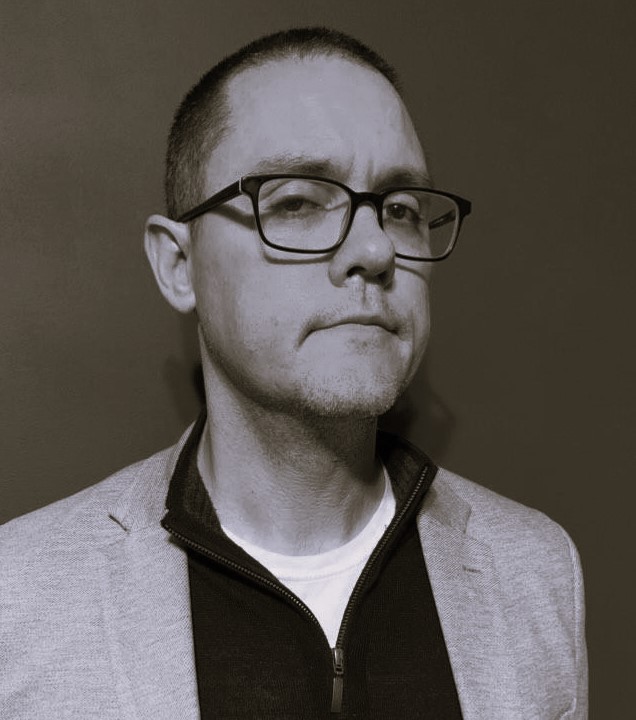 Ryan Habermeyer is the author of the novel Necronauts and the short story collections Salt Folk and The Science of Lost Futures. His award-winning stories and essays have appeared in Conjunctions, Alaska Quarterly Review, Boulevard, Cincinnati Review, Copper Nickel, DIAGRAM, and others. A Fulbright scholar who has lived, taught, and studied in Poland, Scotland, Spain, Mexico, and Romania, he is Associate Professor of Creative Writing at Salisbury University. Find him at ryanhabermeyer.com
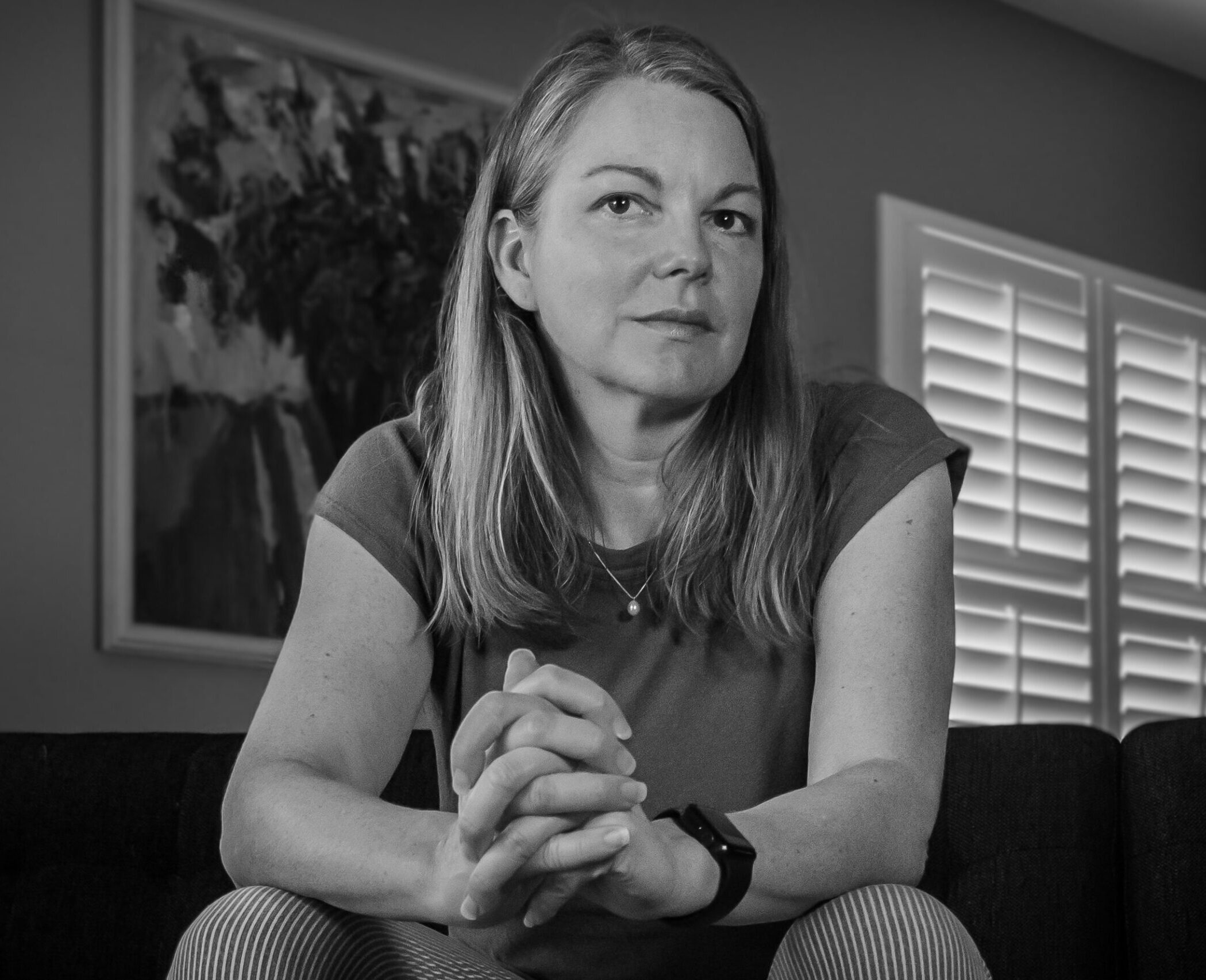 Michelle Ross is the Pushcart Prize-winning author of four story collections: There’s So Much They Haven’t Told You, winner of the Moon City Press Short Fiction Award (2017); Shapeshifting, winner of the Stillhouse Press Short Fiction Prize (November 2021); They Kept Running, winner of the Katherine Anne Porter Prize in Short Fiction (April 2022); and Don’t Take This the Wrong Way, coauthored with Kim Magowan (EastOver Press March 2025). Her fifth book, Squash, is forthcoming from Moon City Press in 2027.

 In September 2022 SmokeLong launched a workshop environment/community christened SmokeLong Fitness. This acclaimed community workshop is happening right now on our dedicated workshop site. If you choose to join us, you will work in a small group of around 15-20 participants to give and receive feedback on flash narratives.