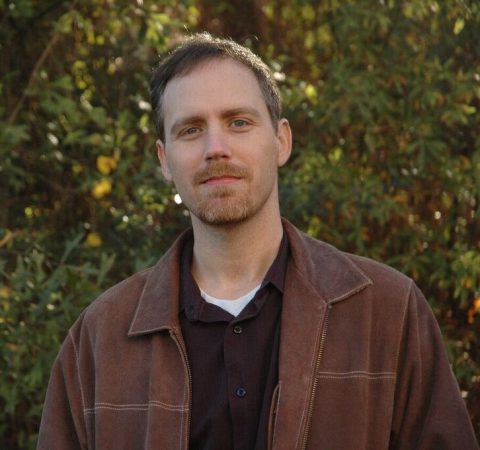
What kind of story would you love to see in the queue this week?
I’d love to see a story that’s so bold, so inventive, so moving, and so conceptually stunning that I never could have predicted its existence. One example I always return to is Jim Shepard’s “In Cretaceous Seas.” That story is hilarious and gorgeous and utterly unhinged. It breaks a litany of rules and works even when it probably shouldn’t. At the end of the day, I want to be surprised, but that surprise should be in service of something meaningful. In the case of Shepard’s story, the dark humor also serves the higher function of defining the protagonist’s pathos.
What do you think is essential to good flash fiction?
In fall of 2017 I had the pleasure of taking a fiction workshop with Anne Sanow. At one point Anne Skyped in David Schuman, who argued that some of the best flash pieces offer a memorable turn—a surprise of some kind—toward the end. Schuman’s story “Miss” serves as a great example of the sort of turn he’s talking about. It’s not a cheap twist but an added layer of complication. Something like that can help avoid the potential problem of flash fiction that feels more like an aborted premise than a fully realized story.
At the most basic level, though, I dig carefully sculpted sentences and a narrative that reminds me that the world is an unfamiliar place. By unfamiliar, I don’t necessarily mean a world populated with intergalactic crab monsters; unfamiliarity can be subtle. Writers like Lydia Davis and Kim Chinquee are great in this regard.
I read that you’re working on a novel. How does your approach to writing a novel differ from your approach to writing short stories?
Reasonable minds may differ, but my approach doesn’t change drastically from one prose form to another. As for the novel, it took me a while to realize I was, in fact, writing a novel. I started with a few scenes and after a while they became a novella. Then one day a professor asked me why I kept referring to my project as a novella; it had become a full-blown novel without my consent. Anyway, it’s true that certain novels take more opportunities for narrative dilation than short stories, and it’s possible that novel chapters have to do more work in towing a “through line,” but beyond that, I try not to overthink the differences. (This might explain why I keep hearing that my novel chapters are paced too much like short stories.)
You’re currently a PhD student at the University of Southern Mississippi. Can you tell us a bit about your experience with the program and how it has influenced your writing?
In short, it has been an invaluable experience to work with great writers/instructors like Andrew Malan Milward, Anne Sanow, Angela Ball, and Justin Taylor. I’ve learned a great deal from each of them (too much to detail individually!). For the past two years, I’ve also worked as an associate editor for Mississippi Review, which is now overseen by the incomparable Adam Clay. I think all writers can benefit from working in editorial roles. It’s very rewarding to know that by producing any given issue you’re making a good many writers/readers happy. By reading and talking about submissions, you also sharpen your sense of the greater literary “conversation,” and that leads you to question how you’d like to respond to said conversation. I’m still working on that part.

 In September 2022 SmokeLong launched a workshop environment/community christened SmokeLong Fitness. This acclaimed community workshop is happening right now on our dedicated workshop site. If you choose to join us, you will work in a small group of around 15-20 participants to give and receive feedback on flash narratives.